Week 05, still going strong.
Week 05 Topics:
Supervised learning was the name of the game this week. Decision Trees, k-Nearest Neighbors (kNN), Random Forests, Bagging/Boosting, and Support Vector Machines (SVMs).
“You down with OOB?… Yea you know me.”
(Quote of the week. Watch this vid if you don’t get the reference)
Again, my Python Machine Learning book was my best friend here.
But many Learning Theory circles say a gestaltist approach is the best way to learn something, that is, read about it from as many different sources as you can, which has the effect of filling in details one source might have left out and giving you the full range of perspectives on the topic.
Just like if you look at a potato from one angle it may look like Channing Tatum, but then you look at it from a different angle and realize that it unfortunately is really just a potato.

Coincidentally very similar to how ensembles in machine learning work!
So I spent a lot of time reading other ML material on this week’s topics and looking through a couple Python implementations of the algos we learned. This was pretty useful for getting a better grasp of them, especially for SVMs, cuz the math involved with that can leave ya feeling a lil drizz.
We also began pairing across cohorts for pair programming exercises this week.
(an aside: the cohort I’m in is #20, but another cohort, #19, is running at the same time. Our lectures are together and the original plan was for pair programming to be done only within your same cohort, but due to some scheduling serendipity we have 3 weeks or so of pairing cross-cohort…).
This is great because it makes my goal of being able to connect with everyone in both cohorts a bit easier.
One of my top reasons for doing Galvanize was to get plugged into a network of data scientists in the Bay Area, and I most def haven’t lost sight of that!
Every single person counts.
Airbnb Office Visit:
On Tuesday I snuck out to go over to the Airbnb building to meetup face-to-face over lunch with my mentor for the first time.
I had heard a lot of stories from people who have been to Airbnb’s HQ before… but wow… I mean that place was really… like just… gah’dam son! The office is mind-blastingly gorgeous!
…like seriously, the interior designer of that place (or was it Brian, Joe, and Nathan?) must’ve been up on some higher-dimensional stuff, for real.

(Not my pic, and doesn’t do it justice. I was too chicken to take one since I didn’t wanna risk looking like a tech otaku having a fanboygasm =/ )
Anyway.. I met up with my mentor, and some of the other Data Scientists on the team.
Although I was worried I wouldn’t “fit in”, mainly cuz I’d say something dumb that gave me away as a lowly Data Scientist in training, they were all super chill and from the conversations we had it was obvious they were beyond rock solid data scientists.
A little frightening because you realize how much there is for you to learn still, but also exciting getting a glimpse of the caliber of people I’ll be working with during the apprenticeship after Galvanize. Hella dope.
The foodies are wondering what the food there is like right?
I’d say somewhere between A- or B+. But that’s only one lousy data point, so YMMV
Churn Prediction Case Study:
Friday we did our second case study, on Churn Prediction.
The challenge this time was less competitive and more business oriented, with the objective being to come up with some actionable insights for a hypothetical company to take to retain customers, given a chunk of raw data. (being intentionally vague about this so that Galvanize can reuse these cases in the future)
The teams were selected randomly, and my teammates were all strong coders (not including me lol) so things for the most part were a lot smoother than last week. I imagine it was probably the same for other groups too, since everyone must’ve learned some major do’s and don’ts from the previous case study.
For me, the lessons learned center around “business thinking”.
Coming up with a well defined business question and the tag-along assumptions about your customers and profits/costs when you look at the data was probably the most important part of this case study.
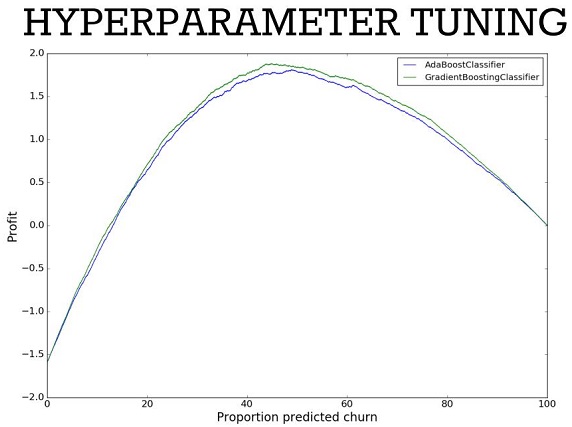
Your answers to these questions could lead you in all sorts of directions when doing EDA and building your model. I’m not a very business-y thinker, so building some intuition for this would be a good idea, methinks.
A book that’s been sitting on my shelf for way too long that would probably help me out on this is Cracking the PM Interview same author as the legendary Cracking the Coding Interview.
Data Scientists aren’t PMs but I think a lot of the product understanding and “business-think” needed overlaps.
Once again, lots of fun-packed learning working on these case studies.
Coming up…
Next week is our last week before breaking for the holidays. It’ll only be a 4-day week, but two of the most fun topics, Scraping and NLP, will be covered so plenty of good times will be had.
Til next week. Onward and Forward!
=)